Books That Inspire Kids to Play Sports and Build Confidence
Last Updated: November 1, 2026
Quick Summary
The books that inspire kids to play sports let a child see themselves in the game before they ever step onto a field, turning reading into playing. Match a sports book to your child's reading level, attention span, and emotional stage, then try a five-minute backyard version of the sport the same week.
A strong preschool sports book ends on belonging, not winning.
Pause on the feeling page and ask your child if they have felt that way.
Reluctant readers often need a character to root for more than a plot.
Try one clinic or class before signing up for a full season.
Praise the try, the pass, and the return after a mistake.
Table of Contents
How to Match a Sports Book to Your Child's Age and Reading Level
Sports Books for Preschoolers: Picture Books That Spark First Interest
Sports Fiction and Adventure Stories for Early and Middle Grade Readers
Books About Teamwork for Kids: Stories That Teach Sharing the Spotlight
Kids' Books About Sportsmanship: Winning, Losing, and Playing Fair
Athlete Biographies and Inclusive Stories That Show Every Kid a Place in Sports
Why Sports Books for Kids Turn Reading Into Playing
The best books that inspire kids to play sports do something a highlight reel can't: they let a child see themselves in the game before they ever step onto a field.
A story gives a child a safe place to rehearse courage. They watch a character miss the shot, feel the sting, and try again. Then, when the real moment comes, the script already lives in their head.
This guide covers how to match sports books for kids to age and reading level, which titles work for preschoolers and early readers, and how to turn a good story into real participation.
How to Match a Sports Book to Your Child's Age and Reading Level
The right sports book for kids is the one that fits three things at once: reading ability, attention span, and emotional stage. A book that's too hard frustrates. A book that's too easy bores. Match all three and reading becomes something your child asks for.
Here's a simple way to sort it:
Ages 3 to 5: Picture books with short sentences, big illustrations, and one clear idea per page. Read-aloud works best here.
Ages 6 to 8: Early readers with simple chapters, repeated vocabulary, and a character they can follow across a series.
Ages 8 to 10: Middle grade stories with more plot, conflict, and emotional depth. Kids this age start caring about why a character acts the way they do.
A common mistake is buying up to a child's grade level instead of their reading level. Those aren't always the same. If your child is an advanced reader, look for a series that grows with them rather than a single book that will feel babyish by next month.
Sports Books for Preschoolers: Picture Books That Spark First Interest
Preschoolers don't need a plot. They need a feeling. The best sports books for preschoolers connect a sport to something warm and familiar, like a character they already love or a bedtime routine.

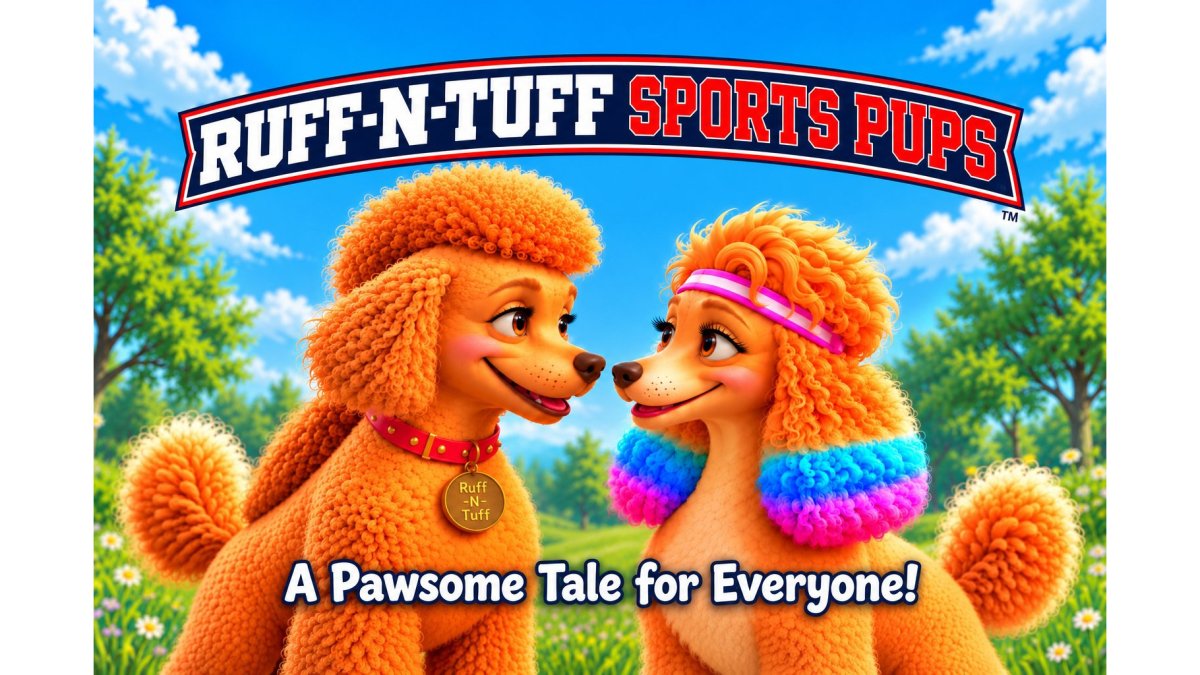
For a dog-led entry point, the Ruff-n-Tuff Sports Pups picture books introduce MacDoodle and friends in short, read-aloud-friendly stories built around trying a sport for the first time.
A Quick Picture-Book Shortlist by Sport
Title | Sport | Best For | Read-Aloud Note |
Peppa Pig Plays Soccer | Soccer | Ages 3-5 | Familiar character lowers resistance |
Goodnight Soccer | Soccer | Ages 3-6 | Rhyming bedtime wind-down |
When You Can Swim | Swimming | Ages 4-7 | Gentle introduction to water |
Skater Cleo | Skating | Ages 4-7 | Non-ball-sport option |
Ruff-n-Tuff Sports Pups titles | Multi-sport | Ages 3-7 | Dog characters model teamwork |
What a Good Preschool Sports Book Gets Right
A strong preschool sports book does four things well:
Uses fewer than three sentences per page
Shows the sport in action through the pictures, not just the words
Names a feeling, like nervous or proud, so kids can name it too
Ends on a note of belonging, not winning
That last point matters more than most parents expect. A child who learns early that the point of a game is playing together carries that lesson into every team they join.
How to Read a Sports Picture Book Aloud
Preschoolers get more from a sports book when the adult treats it as a conversation, not a performance. Three simple moves work well:
Pause on the feeling page. When the character looks nervous, ask, "Have you ever felt like that?"
Point to the action. Name what the pictures show, the pass, the splash, the wobble on skates, so the sport becomes visual vocabulary.
Re-read the same book. Repetition is how preschoolers build both comprehension and confidence; the second and third reads are where the sport idea sticks.
Pro Tip If your child gravitates to one sport in a picture book, try a five-minute backyard version the same week. Preschool attention spans respond better to a short, playful taste than a full practice.
For a ready-made list that grows with your reader, see our roundup of the 12 best sports books for kids ages 6 to 8.
Sports Fiction and Adventure Stories for Early and Middle Grade Readers
Fiction is where sports books for kids start doing real emotional work. A story lets a young reader live through a loss, a comeback, or a hard coach without any real-world risk.
Ruff-n-Tuff Sports Pups
For early and middle grade readers, look for sports fiction that gives the character a genuine problem to solve.
Adventure stories work especially well for kids who say they "don't like reading." Fast pacing, short chapters, and a clear goal keep them turning pages.
What most guides miss is that reluctant readers often need a character they want to spend time with more than they need a plot. A dog, a teammate, a mascot. Something to root for.
Books About Teamwork for Kids: Stories That Teach Sharing the Spotlight
Books about teamwork for kids often show a character choosing the pass over the shot.
The Ruff-n-Tuff Sports Pups collection teaches children how to share the spotlight and play as a squad.
When you read these books aloud, pause at the moment the character has to choose. Ask your child what they'd do. That one question turns a bedtime story into a conversation about character.
For a deeper list of titles built around collaboration, browse our teamwork stories for kids that teach collaboration.
Kids' Books About Sportsmanship: Winning, Losing, and Playing Fair
A child who just walked off a field in tears doesn't want a lecture. They want a story where someone else felt the same thing and came out the other side.
Look for books that show losing honestly. Not glossed over, not fixed in a page. The character sits with the disappointment, then finds a reason to come back.
Situation | What to Look For | Why It Helps |
Child just lost a game | Story where the character loses first | Normalizes the feeling |
Child won and gloated | Story about fair play and respect | Reframes winning as behavior |
Child quits after one bad day | Story about returning after failure | Models perseverance |
Child struggles to share credit | Story centered on a squad, not a star | Shows the value of the team |
If your child is working through a recent loss, our picks for books to help kids handle sports losses give you specific titles to start with. For practical guidance on reinforcing fair play at home, read how to teach sportsmanship to young children.
Athlete Biographies and Inclusive Stories That Show Every Kid a Place in Sports
Biographies give young athletes something fiction can't: proof. A real person struggled, failed, and kept going. For a child who thinks talent is something you're born with, that's a revelation.
The kid who got cut from a team and came back the next season is a more useful story than the highlight reel. Look for titles that spend real page time on practice, setbacks, and the people who helped, not just the championship moment.
A Biography Shortlist With Selection Notes
Title | Athlete / Subject | Sport | Best For | Why It Works |
Messi's Magic | Lionel Messi | Soccer | Ages 6-9 | Early-years focus; growth-hormone story normalizes struggle |
Game Day (Tiki & Ronde Barber) | Barber twins | Football | Ages 6-9 | Twin brothers model teamwork and preparation |
Swim Team | Fictional team | Swimming | Ages 8-10 | Graphic-novel format; inclusion and belonging |
I Am Jackie Robinson | Jackie Robinson | Baseball | Ages 5-8 | Picture-book biography; courage under pressure |
She Persisted in Sports | Multiple women athletes | Multi-sport | Ages 6-9 | Short profiles; broad representation |
The Inclusion Lens Most Lists Skip
Inclusive representation matters here too. Every child should be able to find a sports story where the main character looks like them, plays a sport they love, or comes from a family like theirs. Swimming, skating, tennis, and recreational sports all deserve shelf space, not just the big three.
When you're choosing, look for stories that show noncompetitive participation too. Not every kid wants to compete, and that's fine. A story about a child who plays for the joy of it can be just as motivating as a championship tale.
A practical way to use this lens is to ask a few questions before buying.
Does the main character share something with my child? (gender, culture, disability, family structure, or simply a sport they already love)
Does the book show a beginner's path? First lessons, first failures, first small wins.
Does it leave room for recreation, not just competition? Stories where the character plays for fun widen the definition of "athlete."
Key Takeaway Representation isn't a checkbox, it's how a child answers the question "could that be me?" A biography shelf that includes women athletes, athletes with disabilities, and recreational players gives every reader a yes.
For a deeper list of titles built around collaboration, browse our teamwork stories for kids that teach collaboration.
Turning Reading Inspiration Into Real Sports Participation
A book can light the spark. Turning it into real participation takes a small, low-pressure plan. Here's how we'd do it:
Pick one sport from the story. Ask your child which part of the book they'd want to try.
Start with a backyard version. A ball, a net, a patch of grass. No registration required.
Try a single session before a season. One clinic, one class, one afternoon. Let them decide after.
Keep the story in the loop. Read the book again after the first session and ask what felt different.
Celebrate effort, not outcome. Praise the try, the pass, the return after a mistake.
Watch out: signing a child up for a full season right after one good book can backfire. If they aren't ready, the pressure turns a happy story into a chore.
When you're ready to build the home library that keeps the inspiration going, you can shop Ruff-n-Tuff Sports Pups books and gifts featuring MacDoodle and friends.
Frequently Asked Questions
What are the best sports books for kids who are just starting to read?
For early readers, look for picture books with short sentences, repeated words, and clear illustrations. Ruff-n-Tuff Sports Pups books featuring MacDoodle the Labradoodle also suit this range, pairing sports adventures with dog-centered humor that appeals to young readers building confidence.
How can sports books help children build confidence and teamwork?
Stories let kids rehearse challenges safely. When a character misses a shot, loses a game, or learns to pass instead of shoot, children see perseverance and teamwork modeled step by step. Books about teamwork for kids show that sharing the spotlight is part of winning.
Are there sports books for preschoolers who aren't playing organized sports yet?
Yes. Sports books for preschoolers focus on introducing concepts like kicking, running, and cheering rather than competition. Picture books with simple stories about soccer, swimming, or skating help children connect reading with movement and fun. You do not need a team or league to enjoy them.
How do I choose a sports book that matches my child's age and reading level?
Check three things: the reading level listed by the publisher, the length and sentence structure, and whether the sport matches your child's interest. Preschoolers do best with picture books of 32 pages or fewer. Early elementary readers can handle short chapters. Middle grade readers want richer plots and characters facing real setbacks. If your child is an advanced reader, look for titles with more complex vocabulary so the story still feels age-appropriate.
Building a child's confidence isn't a single conversation. It's a series of small moments, and stories are one of the easiest to create. Ruff-n-Tuff Sports Pups gives you a lovable Labradoodle guide in MacDoodle, sports-themed adventures that teach mental toughness, and interactive coloring books that let kids create their own version of the story. Get started with Ruff-n-Tuff Sports Pups and give your young athlete a character to grow up with.

Comments