HarperCollins Alternatives: Sports Books for Young Readers
Last Updated: November 8, 2026
Quick Summary
A HarperCollins alternative for sports reading materials should match your child's reading level, sport, and emotional stage, not just their age. Compare options using six criteria: reading level, sport relevance, format, values content, series depth, and publisher access. Independent series like Ruff-n-Tuff Sports Pups pair sports books with interactive coloring books for added engagement.
Three factors decide whether a sports book gets read: reading level, sport relevance, and a usable emotional lesson.
Preschoolers do best with picture books featuring short sentences, bold illustrations, and a message about trying something new.
Ten-year-olds need chapter books with real stakes, flawed characters, and series they can binge.
Score each option one to five on six criteria, weighting what matters most for your child.
Buy one book first, then commit to the series only if the first one lands.
Looking for sports books your child will actually read?
Ruff-n-Tuff Sports Pups creates sports stories and coloring books starring MacDoodle for young athletes.
Table of Contents
Why Families Look Beyond HarperCollins for Sports Books
Parents still struggle to find sports books that match a specific child's age, reading level, and sport. That gap is why so many families search for a HarperCollins alternative for sports reading materials. Parents and grandparents often say the big publisher catalogs are not organized around a seven-year-old who plays soccer and reads at a second-grade level.
The real problem is not quality. It is fit. A sports book that lands with a child has to match their reading level, their sport, and their emotional stage all at once. Below, we break down what actually works at each age, where to look beyond the major houses, and how to compare options side by side.
What Makes a Sports Book Work for Your Child
Three things decide whether a sports book gets read twice or forgotten on a shelf: reading level, sport relevance, and an emotional lesson the child can actually use.
Reading level comes first. A book pitched at the wrong level kills interest faster than a boring cover. Look at sentence length and page density, not just the age label. Sport relevance comes second: a baseball-obsessed eight-year-old will tolerate a soccer story, but a story about a sport they play will always win. The third factor is the one most guides skip. Children connect with characters who lose, doubt themselves, and come back. That is where perseverance and sportsmanship stop being abstract words and start being something a kid feels.
A common mistake is buying for the sport alone and ignoring the emotional arc. The books children return to are the ones where the character faces the same fear they do before a big game.
Sports Books for Preschoolers: Building a Reading Habit Early
For preschoolers, the best sports books are picture books with short sentences, bold illustrations, and a simple message about trying something new. At this age, the goal is not sports knowledge. It is making reading feel like play.
Look for picture books where a character attempts a sport for the first time and the story treats that attempt as brave, not embarrassing. Rhyme helps. So do repeated phrases a three- or four-year-old can chime in on. If you want a deeper list, our guide to picture books about trying a new sport walks through options built around first-time nerves.

A good gift at this age is a book the adult will happily read aloud for the twentieth time. That is the real test.
Sports Books for 10 Year Olds: Chapter Books That Keep Them Hooked
Ten-year-olds need chapter books with real stakes. By this age, many readers want a series they can binge, characters with flaws, and plotlines where the outcome is genuinely uncertain.
This is also the age where reluctant readers often stall. A child who plays three sports but avoids reading will usually accept a sports chapter book if the action starts on page one. Series matter here because finishing one book builds momentum into the next. If you are shopping for this age group specifically, our list of the 12 best sports books for kids ages 6 to 8 is a useful starting point for younger siblings, while ten-year-olds are ready for longer chapter books with subplots.
What most guides miss is that ten-year-olds care about the team, not just the star. Books where the protagonist learns to share the spotlight hold attention longer than solo-hero stories.
Sports Books for Middle Schoolers: Deeper Stories, Bigger Lessons
Middle school readers are ready for athlete biographies, memoirs, and fiction that tackles pressure, failure, and leadership. The best sports books for middle schoolers treat sports as a lens for bigger questions: how to handle a coach who is unfair, how to lead when teammates do not listen, how to lose without falling apart.
Nonfiction works especially well here. Athlete biographies and memoirs give middle-grade readers real proof that struggle is part of the path, not a sign of weakness. For families who want picks built around grit and resilience, our roundup of sports biographies for middle school students digs into titles that do exactly that.
Some parents assume a middle schooler wants only fiction, but many prefer true stories. Ask before you buy.
Interactive Coloring Books for Sports Fans: Reading Meets Creativity
Interactive coloring books for sports fans combine storytelling with hands-on creative play, which makes them a strong bridge for children who love sports but resist sitting still for a chapter book. A child colors a scene, reads the caption, and stays engaged longer than they would with text alone.
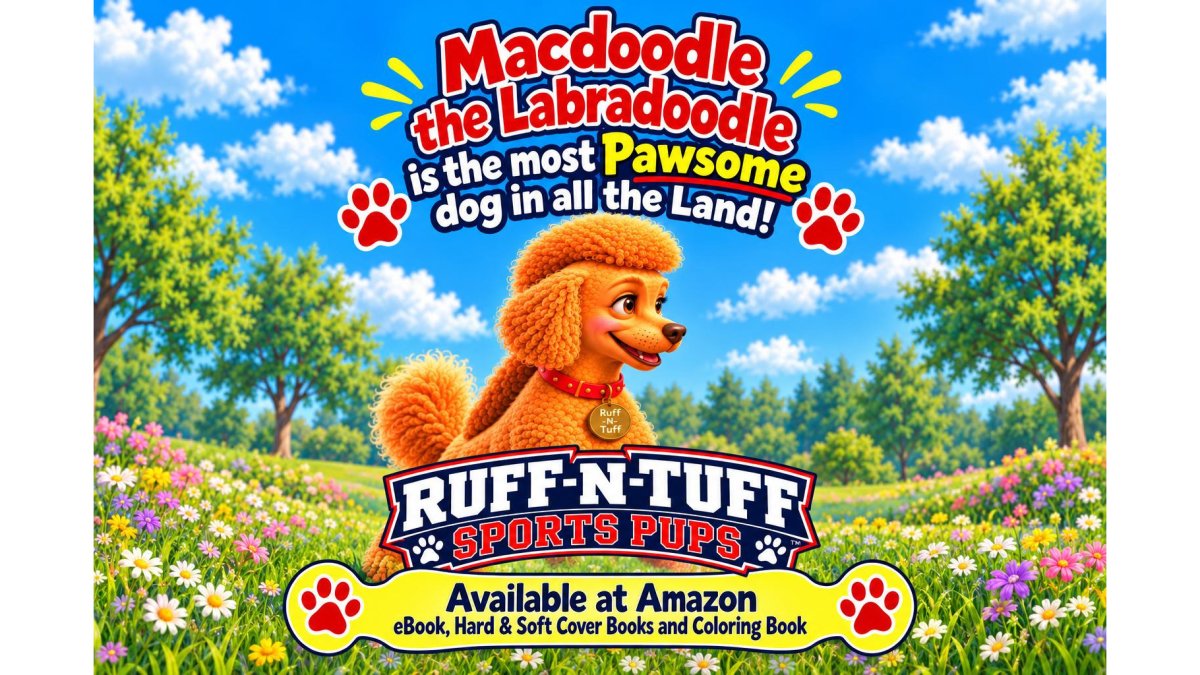
This is where Ruff-n-Tuff Sports Pups fits naturally. Our collection stars MacDoodle, a lovable Labradoodle, in sports-themed adventures built around teamwork, grit, and confidence. The interactive coloring books let a child color the same characters they meet in the stories, which reinforces the lesson through play. If you want to see the actual titles available, browse our interactive coloring books for sports fans and match one to your child's favorite sport.
For a Goldendoodle or Labradoodle family, the dog angle is not a gimmick. It gives a sports-averse child a reason to pick up the book.
How to Compare Sports Reading Materials Side by Side
Comparing sports reading materials comes down to six criteria: reading level, sport relevance, format, values content, series depth, and publisher access. The first five are standard. The sixth is the one that matters most when you are specifically looking for a HarperCollins alternative, because the question is not just which book fits your child but which catalog can actually get it into your hands in the format you need.
Here is the rubric we use at Ruff-n-Tuff Sports Pups when a family asks us to help them choose between a big-house title and an independent option.
Criterion | What to Check | Why It Matters |
Reading level | Sentence length, words per page, vocabulary load | Wrong level kills interest faster than a boring cover |
Sport relevance | Sports featured, on-field scene count, accuracy of play | Kids read what they play |
Format | Picture book, chapter book, coloring book, audiobook, ebook | Matches attention span and access needs |
Values content | Teamwork, perseverance, sportsmanship, handling loss | Lessons carry off the field |
Series depth | Number of titles, recurring characters, reading order | Momentum for repeat readers |
Publisher access | Print availability, library distribution, ebook and audiobook options, classroom ordering | A perfect book you cannot get is not an alternative |
Score each option from one to five on every criterion, then weight the ones that matter most for your child. A preschooler's family should weight format and reading level heavily. A middle schooler's family should weight values content and series depth.
The publisher-access criterion is where comparisons often stop short. Before committing to any title, check whether it is available in print and ebook, whether a library or school can order it, and whether an audiobook is offered for a child who reads below grade level but comprehends above it.
Common Sense Media's guide to choosing books by age and reading level offers an independent check on age appropriateness when you are unsure about a title's content.
Watch out: scoring a book high on sport relevance and values content but low on publisher access can leave you with a recommendation you cannot actually buy, borrow, or assign. Check availability before you fall in love with a title.
Choosing Your Next Sports Book Series
Picking a series beats picking a single title almost every time, but only if the series matches a clearly defined reader. The mistake most families make is choosing by sport alone. A better method is to build a three-line reader profile first, then match that profile to a series and a publisher.
Start with the reader, not the sport. Write down three things: age and grade, reading level (ask a teacher or use a quick five-finger test on a sample page), and what the child actually plays or watches. That profile does most of the work.
Next, match the profile to a format and a source. Confident readers who want longer stories should look for chapter book series with recurring characters and a clear reading order.
When you are comparing a HarperCollins sports series against an alternative, ask four questions before you buy:
Does the series have a defined reading order, or can titles be read in any sequence?
Are the characters recurring, or does each book start over with a new cast?
Is the sport accuracy good enough that a child who plays will not be pulled out of the story?
Can you get the next book in the same format, or does the series switch from print to ebook partway through?
Check before committing: big-publisher series may have uneven reading levels across titles, while smaller series may offer fewer titles.
Watch out: buying a whole series before the first book is finished is the most common waste of money at this stage. Buy one, see how it lands, then commit. If the first book is a hit, buy the second before the third, because series quality can vary by title even within the same imprint.
Finding the right sports reading materials for a child takes more than a familiar publisher name. It takes matching the book to the reader. Ruff-n-Tuff Sports Pups builds sports-themed stories and interactive coloring books around MacDoodle, a Labradoodle who teaches kids to share the spotlight, bounce back from setbacks, and believe in themselves.
Frequently Asked Questions
What are some alternatives to HarperCollins for kids' sports books?
Several independent publishers and small presses now offer sports books for children, including Ruff-n-Tuff Sports Pups, which features a Labradoodle character named MacDoodle in sports-themed adventures. Ruff-n-Tuff's collection pairs its stories with interactive coloring books and focuses on values such as teamwork and perseverance. When comparing options, look at the age range, reading level, and whether the stories reflect your child's interests. You can explore the full collection at https://www.ruffntuffsportspups.com to see if the MacDoodle series fits your family.
What are good sports books for 10-year-olds?
Ten-year-olds often enjoy chapter books with relatable characters facing real challenges on and off the field. Look for stories that blend sports action with lessons about teamwork, handling mistakes, and mental toughness. The MacDoodle adventures from Ruff-n-Tuff Sports Pups focus on teamwork, mental toughness, and self-belief in young athletes. Other options include athlete biographies written for middle-grade readers and fiction series centered on team dynamics. Check the reading level and whether the sport matches your child's interest before buying.
Are there sports books for preschoolers?
Yes. Preschoolers respond well to picture books with simple text, bright illustrations, and familiar themes. Sports books for preschoolers often feature animal characters or young children learning basic skills like kicking a ball or taking turns. Ruff-n-Tuff Sports Pups offers stories starring MacDoodle the Labradoodle, which combine sports themes with gentle lessons about sharing the spotlight and trying again. These books can be read aloud and introduce positive messages about teamwork and perseverance.
How do I choose a sports book for a child?
Start by matching the book to your child's reading level and age. Preschoolers need picture books with short sentences, while 10-year-olds can handle chapter books with more complex plots. Consider the sport your child enjoys and whether the story emphasizes values you want to reinforce, such as sportsmanship or resilience. Also check the format: some children engage more with interactive coloring books that let them participate creatively. Reading a sample page or reviews can help you judge whether the tone and difficulty are right.


Comments