12 Best Sports Books for Kids Ages 6 to 8
Last Updated: October 26, 2026
Quick Summary
Sports books for kids ages 6 to 8 combine adventure with lessons about teamwork, competition, and resilience. Early readers this age benefit from stories that match their interests and reading level, whether picture books for 6-year-olds or chapter books for 8-year-olds. The right sports book keeps pages turning while teaching values that extend far beyond the playing field.
Picture books and early readers work best for 6-year-olds with guided reading levels D-J or Lexile 100-400L.
Eight-year-olds can handle chapter books with guided reading levels M-P or Lexile 500-700L and more complex plots.
Popular sports series for this age include Jake Maddox, Ballpark Mysteries, and Ruff-n-Tuff Sports Pups.
Interactive coloring books extend the reading experience and build fine motor skills while reinforcing story connections.
Diverse protagonists and adaptive sports stories broaden children's view of who plays sports and can participate.
Table of Contents
Why Sports Books Matter for Early Readers

Sports books for kids ages 6 to 8 combine adventure with real-world lessons about competition, teamwork, and resilience.
Early readers this age are moving beyond simple picture books but aren't ready for chapter-heavy novels.
Sports books also teach values that stick. A child who reads about a character overcoming self-doubt on the soccer field carries that lesson into their own life, and stories of teammates celebrating each other's wins reinforce what coaches teach at practice.
Research on children's literacy and engagement shows that books matching a child's interests lead to stronger reading habits. For kids drawn to sports, the right book becomes something they actually want to read, not something a parent has to push.
Sports Books for 6-Year-Olds: Building Confidence Through Stories
Six-year-olds are typically in kindergarten or early first grade, and most are visual learners who need illustrations to carry the story. Match the book's reading level to your child's decoding skills, not just their age.

At this stage, sports books work best around simple, relatable moments: trying a new sport, being nervous at practice, or celebrating a small win.
For children ready for more text, early reader series like Pete the Cat: Play Ball! by James Dean offer simple sentences, picture clues, and a sports theme that feels like a real story.
Ruff-n-Tuff Sports Pups books for this age use the same principle: a lovable character like MacDoodle faces a small challenge and discovers something about themselves.
When choosing sports books for a 6-year-old, consider these practical details:
Reading level: Look for guided reading levels D-J or Lexile 100-400L for independent reading. For read-alouds, you can go slightly higher.
Format: Picture books (32 pages) and early readers (32-48 pages) are ideal. Avoid chapter books unless your child is an advanced reader.
Sports represented: Soccer, baseball, basketball, and swimming are common, but also look for books about gymnastics, martial arts, and track to match your child's interests.
Diversity and accessibility: Seek out books with diverse protagonists and adaptive sports stories, such as Emmanuel's Dream by Laurie Ann Thompson (about a boy with a disability who becomes a cyclist) or The Girl Who Ran by Frances Poletti (about a girl who runs across the country). These broaden your child's view of who plays sports.
Handling competition and losing: For this age, choose books where the character faces a small setback (missing a shot, losing a race) and learns a simple lesson about effort or sportsmanship. Avoid stories with heavy pressure or complex team dynamics.
For 6-year-olds, the goal isn't deep themes. It's building a positive association with reading and showing that sports stories are fun, not intimidating.
Here's how to match sports books to your 6-year-old's reading level and interests.
Detail | What to Look For | Why It Matters |
Reading level | Guided reading levels D-J or Lexile 100-400L | Ensures independent reading without frustration |
Format | Picture books or early readers, 32-48 pages | Keeps attention and builds confidence |
Sports | Soccer, baseball, basketball, swimming, gymnastics | Matches your child's interests and experience |
Diversity | Books with diverse protagonists and adaptive sports | Broadens view of who plays sports |
Competition | Small setbacks with simple lessons about effort | Age-appropriate without heavy pressure |
Reading time | Stories finish in one sitting, 10-15 minutes | Achievable goal that feels like success |
Sports Books for 8-Year-Olds: Chapter Books and Deeper Adventures
Eight-year-olds are typically in second or third grade. Many can handle chapter books with fewer illustrations and more text per page, and they're ready for more complex plots and character development.
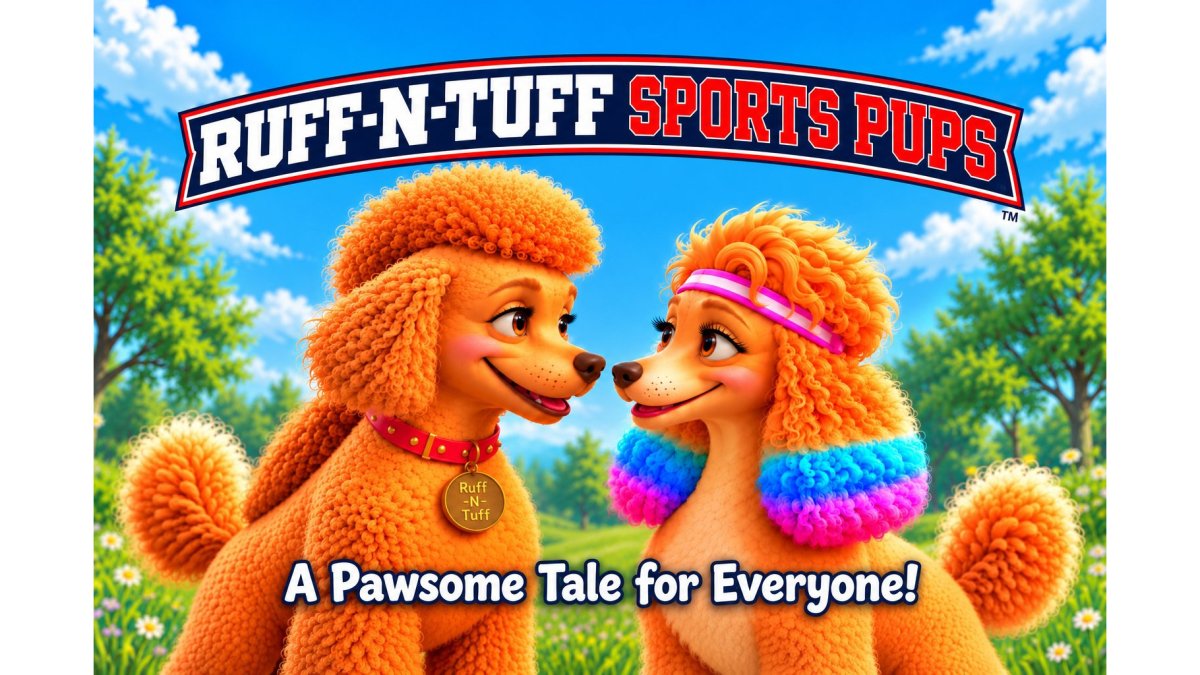
Ruff-n-Tuff Sports Pups
This is when sports books can tackle bigger themes: a kid who doesn't make the team they wanted, or how to handle losing gracefully.
Early chapter books work well here. Goodnight Soccer and similar titles bridge picture books and full chapter books, with illustrations but more text, giving 8-year-olds the sense they're reading "real" books.
Series are especially important at this age: if they love one book, they want the next. Popular sports series include Jake Maddox (diverse characters, real-life challenges), The Zach and Zoe Mysteries by Mike Lupica (sports-themed mysteries), and Ballpark Mysteries by David A. Kelly (baseball adventures).
Ruff-n-Tuff Sports Pups offers multiple books featuring MacDoodle, letting kids follow the character across different sports and challenges.
When selecting sports books for an 8-year-old, consider these practical details:
Reading level: Guided reading levels M-P or Lexile 500-700L for independent reading. For advanced readers, look for levels Q-S.
Format: Chapter books (64-96 pages) with short chapters and some illustrations. Graphic novels are also a great option for reluctant readers.
Sports represented: Include a mix of team sports (soccer, baseball, basketball, football) and individual sports (swimming, gymnastics, martial arts, track). Books about less common sports can spark new interests.
Diversity and accessibility: Look for books with diverse protagonists and stories about adaptive sports. For example, The Distance Between Us by Reyna Grande (not sports-specific but diverse) or Sports Stories series featuring characters with disabilities. Also consider books about girls in sports, such as The Girl Who Ran or Mia Hamm: Winners Never Quit.
Handling competition and losing: At this age, books can explore more complex emotions around competition. Choose stories where characters learn to cope with losing, handle pressure, and prioritize effort over outcome. Books like The Kid Who Only Hit Homers by Matt Christopher or Baseball Ballerina by Kathryn Cristaldi show characters overcoming setbacks.
Nonfiction vs. fiction: Balance fictional stories with biographies of athletes. For example, I Am Jackie Robinson by Brad Meltzer or She Persisted in Sports by Chelsea Clinton offer real-life inspiration.
Sports Books About Teamwork for Kids: Lessons Beyond the Field
Teamwork is one of the most important lessons sports books can teach.
The best teamwork books don't preach, they show: a character realizes the team plays better when everyone contributes, or a shy kid discovers their role matters as much as anyone else's.
American Academy of Pediatrics guidance on children's media and social development emphasizes that stories modeling cooperation help children develop empathy and collaborative skills.
Explore additional teamwork stories for kids that deepen the lessons discussed in this section.
For kids ages 6 to 8, teamwork stories work best when they're age-appropriate. A 6-year-old might connect with a simple story about sharing the ball.
Ruff-n-Tuff Sports Pups centers teamwork in its storytelling. MacDoodle learns alongside other characters. The stories show that sharing the spotlight isn't about losing, it's about winning together.
Interactive Coloring Books for Sports Fans: Creativity Meets Athletics
Interactive coloring books offer something reading alone doesn't: a creative outlet that extends the sports story experience. For kids ages 6 to 8, coloring combines fine motor skill development with imaginative play.

These books work best when they connect directly to the stories kids are reading. If a child has read about MacDoodle winning a soccer game, coloring that scene reinforces the story and lets the child add a creative touch.
Coloring also serves busy families: it's a quiet, screen-free activity for car rides, waiting rooms, or winding down before bed. It builds focus and patience, and for kids who struggle with traditional reading, it keeps them connected to the characters they love.
The best interactive coloring books for this age include prompts or story elements within the pages, not just blank spaces to fill.
Picture Books vs. Chapter Books: Choosing the Right Format
The choice between picture books and chapter books depends on your child's reading level and attention span, not age alone.
Picture books work best for early readers because illustrations carry half the storytelling load. Text is minimal and pages turn quickly, giving a sense of progress that feels achievable.
Chapter books demand sustained attention across multiple pages, with sparse illustrations, sometimes only at chapter breaks.
Match the format to where your child actually is, not where you think they should be. A frustrated reader forced into chapter books stops reading; a confident reader bored by picture books loses interest too.
Many families use both: picture books at bedtime for relaxation, chapter books for dedicated reading time, or alternating week by week.
See curated sports-themed book recommendations that complement this article's focus on quality children's sports literature.
For sports books specifically, picture books often focus on single moments or simple adventures. Chapter books can follow a character through an entire season or multiple sports challenges.
Starting Your Child's Sports Book Collection
Building a sports book collection doesn't mean buying everything at once.
Look for books featuring sports your child plays or watches, since a child learning soccer engages more deeply with soccer stories.
Mix formats: picture books for comfort reads, chapter books for challenge, and interactive coloring books as creative extensions. Variety keeps reading from feeling like a single activity.
American Library Association recommendations for building children's book collections suggests rotating books regularly. Keep some on the shelf, store others away, then swap them.
Browse and purchase sports books and related merchandise to begin building your child's collection.
Quality matters more than quantity. Three books your child loves and rereads beat ten gathering dust.
Ruff-n-Tuff Sports Pups offers books that build confidence and interactive activities that extend learning. Browse Ruff-n-Tuff Sports Pups books and merchandise at https://www.ruffntuffsportspups.com.
Building your child's love for reading and sports doesn't require a perfect collection, it requires books that match where they are right now. Start with one story that speaks to your child's interests, watch them discover characters and lessons that matter, and grow from there. Browse Ruff-n-Tuff Sports Pups books and merchandise to find stories and interactive activities that will inspire your young athlete to read, believe in themselves, and discover their inner champion.
Frequently Asked Questions
What are some good sports books for a 6-year-old?
Six-year-olds thrive with picture books and early chapter books that feature short sentences and bright illustrations. Look for titles centered on soccer, baseball, and swimming with relatable characters and simple plots. Picture books with sports themes help early readers build fluency while staying engaged with action-packed stories. Series like Ruff-n-Tuff Sports Pups combine adventure with character lessons about teamwork and perseverance, making them ideal for this age group.
What are some good sports books for 8-year-olds?
Eight-year-olds are ready for longer chapter books with more complex plots and character development. This age enjoys sports books about teamwork for kids, athlete biographies, and fiction stories with humor and heart. They can handle multiple chapters and appreciate books that explore themes like overcoming challenges, building confidence, and learning from mistakes. Many 8-year-olds enjoy series that let them follow characters across multiple adventures.
How do I choose a sports book for a child who is learning to read?
Match the book to your child's reading level, not just their age. Look for books with large print, short chapters, and illustrations on every page. Choose sports that match your child's interests, whether that's soccer, baseball, basketball, or less common activities like skating or swimming. Start with picture books or early chapter books, and gradually introduce longer formats as confidence grows. Interactive coloring books for sports fans can supplement reading by keeping your child engaged with the theme creatively.
Are there sports books for kids that teach teamwork and perseverance?
Yes, many sports books for kids ages 6 to 8 weave in lessons about teamwork and perseverance naturally through their stories. Books that show characters working together, learning from failure, and practicing to improve help children understand these values in action. Ruff-n-Tuff Sports Pups specifically focuses on these themes, teaching kids to share the spotlight and develop mental toughness through relatable sports adventures. Look for titles where the main character faces a challenge and grows by working with teammates or pushing through practice.
Buy on Amazon
Add ruffntuffsportspups.com as a preferred source on Google →

Comments