Buy Sports Themed Books for Kids Online: 7 Picks
Table of Contents
Why Buying Sports Books Online Beats the School Book Fair
Children's Sports Books: A Quick Comparison by Age and Sport
Picture Books for Ages 3-5
Early Readers and Chapter Books for Ages 6-10
1. Ruff-n-Tuff Sports Pups: The Labdoodle Series That Teaches Grit
2. Sports Books That Teach Teamwork: What to Look For
3. Interactive Coloring Books for Sports Fans: Screen-Free Fun
4. Baseball, Soccer, and Hockey: Finding the Right Sport Series
5. How to Buy Sports Themed Books for Kids Online Without Guessing
Conclusion: Build a Reader and an Athlete at the Same Time
Frequently Asked Questions
Last Updated: October 21, 2026
Why Buying Sports Books Online Beats the School Book Fair
Book fairs are nostalgia machines with a checkout line. The selection is thin, the pressure to buy is high, and you rarely get to check reading levels before your kid commits. When you buy sports themed books for kids online, you get the opposite: full descriptions, age guidance, reviews from other parents, and the ability to compare a picture book against a chapter book before spending a penny. At Ruff-n-Tuff Sports Pups, we have spent years watching how sports stories change the way kids see themselves, and the single biggest barrier is parents guessing wrong about age and reading level.
Here is the good news. A focused list beats a giant retail page every time, because someone has already done the sorting for you.
Children's Sports Books: A Quick Comparison by Age and Sport
Children's sports books break into two broad groups: picture books for ages 3-5 and early readers or chapter books for ages 6-10. Picture books favor rhythm, repetition, and big illustrations. Chapter books add plot, dialogue, and real emotional stakes. Match the format to the reader first, then pick the sport. Most top-ranking retail pages stop there, but parents need more: a way to match books to a child's actual reading level, not just an age band. Below is a practical comparison that goes beyond the store category.
Age | Format | What Works | Watch For | Reading-Level Tip |
3-5 | Picture books | Short sentences, bold art, read-aloud rhythm | Too much text per page | Look for 1-2 sentences per page; check that the story reads aloud in under 5 minutes |
6-8 | Early readers | Simple plots, familiar sports, short chapters | Vocabulary that outpaces the reader | Aim for 2-3 short chapters per sitting; if the child stumbles on 5+ words per page, drop a level |
8-10 | Chapter books | Team dynamics, setbacks, character growth | Thin plots that feel babyish | Check that the book has 8+ chapters and a clear emotional arc; series format builds stamina |
Picture Books for Ages 3-5
For the youngest readers, the pictures do half the work. Look for one clear idea per page and a story that reads well out loud, because you will be reading it forty times. Sports themes work beautifully here: kicking a ball, missing a shot, trying again. Keep an eye on sentence length. If a page has more than three lines of text, a four-year-old will lose the thread. A practical test: open to a random page and count the words. If it takes more than 15 seconds to read aloud, the book is likely too dense for this age group. For sports-themed picture books, look for titles that show a character practicing a skill, not just winning a game, the practice scenes are what toddlers imitate.
Early Readers and Chapter Books for Ages 6-10
This is where sports fiction earns its keep. Kids in this range want a character to follow across chapters, and a team to root for. According to Reading Rockets' guidance on children's reading development, confidence grows fastest when children choose books slightly below their frustration level. That means an advanced eight-year-old can still enjoy a well-written chapter book if the story respects her intelligence. Plot quality matters more than word count. A common pattern among parents is to buy one book from a series, read it together, and then let the child choose the next title, this hands over control and builds ownership. For sports chapter books, check that the sports action is woven into the plot, not just a backdrop; a book that could swap baseball for soccer without changing the story is probably not teaching much about the sport.
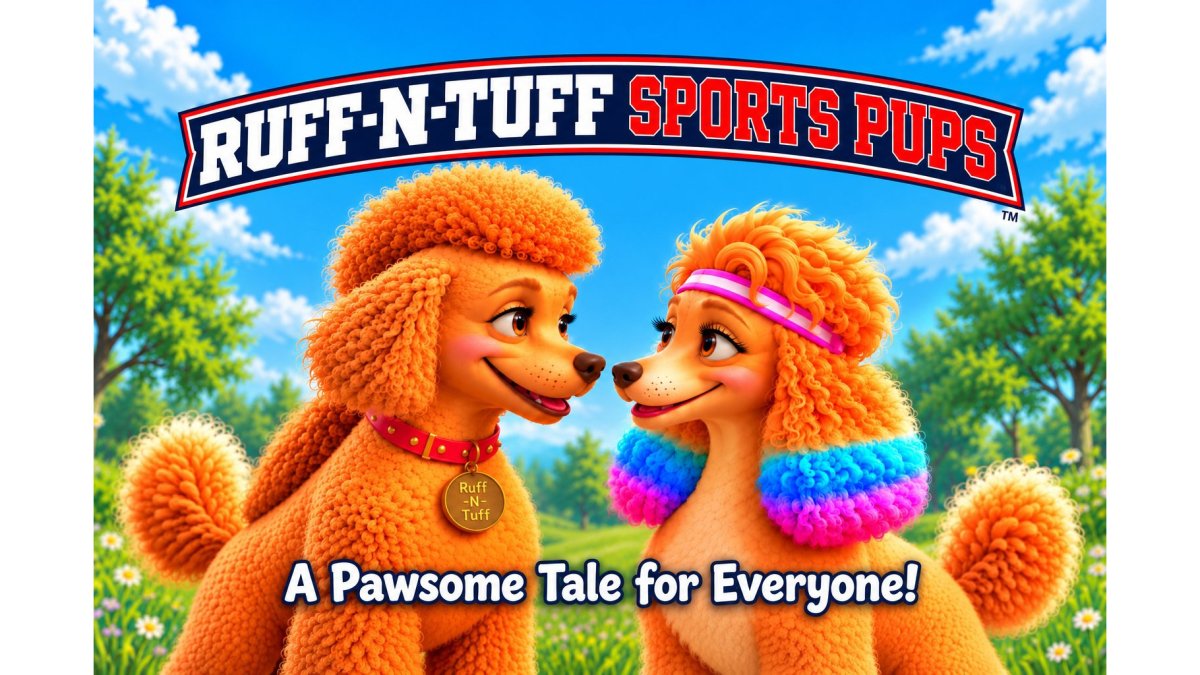
1. Ruff-n-Tuff Sports Pups: The Labdoodle Series That Teaches Grit
Our top pick for sports books that teach teamwork is Ruff-n-Tuff Sports Pups, a series built around MacDoodle, a lovable Labradoodle who plays sports and learns hard lessons along the way. The stories cover mental toughness without lecturing, which is the hard part.

The series also includes interactive coloring books for sports fans, which matters more than it sounds. Coloring gives a child a screen-free way to stay inside the story after the last page. You can browse the full collection at ruffntuffsportspups.com.
Pro Tip Read the first book together, then hand over the coloring book during a rainy afternoon. Kids who color a character tend to ask for the next story on their own.
2. Sports Books That Teach Teamwork: What to Look For
Sports books that teach teamwork share three traits: a protagonist who fails, a teammate who matters, and a resolution that requires both. Skip books where the hero wins alone. The best teamwork stories put the main character in a spot where personal glory costs the group something, then let the child feel that trade-off. Look for scenes with assists, substitutions, and apologies. Those small moments teach more than any slogan on a poster.
A practical test: flip to the middle of the book. If the main character is still solving every problem alone, the book is about talent, not teamwork. That is fine, but it is not what you came for.
3. Interactive Coloring Books for Sports Fans: Screen-Free Fun
Interactive coloring books for sports fans turn a passive reader into an active one. A good sports coloring book pairs scenes from the story with prompts: draw your own jersey number, color the winning goal, design a team crest. That combination of reading and making locks in vocabulary and keeps hands busy. For kids aged 4-8, coloring is often the bridge between "I can't read that yet" and "I want to try."
Watch Out Avoid coloring books with tiny, intricate line art for younger kids. Frustration at the crayon stage convinces a child that the whole activity is too hard, and they will not come back to it.
4. Baseball, Soccer, and Hockey: Finding the Right Sport Series
Baseball, soccer, and hockey each carry their own story rhythms, and kids notice. Baseball books lean on patience and the long season. Soccer books move fast and reward quick decisions. Hockey books bring physical courage and cold-weather grit. A child who plays shortstop will forgive a slow middle chapter if the game details ring true.
Here is a curated shortlist of well-known sports series, with notes on what each does best and who it suits. These are widely available and have stood up to classroom and library use.
Matt Christopher series (baseball, soccer, hockey, basketball): Standalone chapter books, usually 8-12 chapters, ages 7-10. Strengths: clear sports action, relatable protagonists, and a lesson about teamwork or perseverance in each book. Suitable for readers who want a complete story in one book, not a multi-volume commitment. Watch for: some titles feel dated in language and gender roles; check publication year if that matters to you.
Jake Maddox series (sports stories across many sports): Short, high-interest chapter books, ages 8-11, often used for reluctant readers. Strengths: fast pacing, plenty of dialogue, and sports-specific vocabulary. Suitable for kids who lose interest in longer books. Watch for: plots can be formulaic; good for building stamina, less good for deep character work.
Mike Lupica's Comeback Kids and similar middle-grade novels: Longer chapter books, ages 9-12. Strengths: emotional depth, family and community themes, and realistic sports pressure. Suitable for strong readers who want a novel, not a series installment. Watch for: heavier themes (injury, loss, parental job loss) that may need discussion.
Sports Illustrated Kids graphic novels: Illustrated sports stories, ages 7-10. Strengths: visual appeal for kids who resist text-only books, and quick reads that still teach game rules. Suitable for visual learners and kids transitioning from picture books. Watch for: less text means less vocabulary stretch; pair with a chapter book for balance.
Series format helps here. Once a reader finishes one book, the next is waiting, and momentum carries them. Common Sense Media's advice on choosing book series for kids notes that series reading builds stamina precisely because the world is already familiar.
5. How to Buy Sports Themed Books for Kids Online Without Guessing
Buying online removes the guesswork if you ask the right questions before checkout. Use this checklist:
Confirm the reading level, not just the age range
Read the sample pages if the listing offers them
Check the format: print, Kindle, or boxed set
Look for a series, not a single title
Read two or three parent reviews for pacing complaints
Confirm the book ships in time for the occasion
Key Takeaway The fastest way to buy sports themed books for kids online without regret is to match format to reading level first, sport second, and price last.
Availability and pricing vary by format and retailer, so check the current listing before you commit. If you are buying as a gift, a boxed set or a book paired with a coloring book reads as more thoughtful than a single title.
Conclusion: Build a Reader and an Athlete at the Same Time
The challenge is not finding sports books. It is finding the ones your child will actually finish, then ask for again. Ruff-n-Tuff Sports Pups was built for exactly that moment, with MacDoodle leading sports-themed adventures that teach mental toughness, teamwork, and self-belief, plus interactive coloring books that keep the story alive off the page. Start with the first book, add a coloring book, and watch a reluctant reader turn into a kid who asks what happens next. Get started with Ruff-n-Tuff Sports Pups and build both a reader and an athlete at the same time.
Frequently Asked Questions
Where can I buy sports books for kids online?
You can buy sports themed books for kids online directly from publisher websites and major retailers. For a curated option, visit ruffntuffsportspups.com to browse the MacDoodle series and interactive coloring books. When shopping online, check the age range and reading level listed on each product page, and look for series bundles if your child likes to read more than one book. Buying direct from a publisher often gives you access to the full collection in one place.
Which sports books are good for kids who are just learning to read?
Look for picture books with short sentences, large text, and illustrations that support the story. Books featuring a recurring character, like the MacDoodle series from Ruff-n-Tuff Sports Pups, help early readers build confidence because they recognize the character and predict the story pattern. Sports-themed early readers that focus on one simple lesson per book, such as sharing the ball or trying again after a mistake, work well for children ages 5 to 7 who are moving from picture books to simple chapter books.
Are there sports-themed coloring books for kids?
Yes. Interactive coloring books for sports fans combine coloring pages with sports scenes, characters, and simple activities. Ruff-n-Tuff Sports Pups offers coloring materials featuring MacDoodle the Labradoodle, which pair well with their storybooks. Coloring books help younger children, especially ages 3 to 6, engage with sports themes even before they can read independently. They also work as quiet-time activities during tournaments or long car rides to games.
Can sports books help teach kids teamwork and perseverance?
Sports books that teach teamwork use game situations to show characters passing the ball, cheering for teammates, and handling losses. Because the lesson happens inside a story, children absorb it more naturally than from a lecture. Look for books where the main character faces a real setback, like missing a shot or sitting on the bench, and works through it. The MacDoodle series from Ruff-n-Tuff Sports Pups builds each story around mental toughness and self-belief, which gives parents a shared reference point when talking about effort after a tough game.
How do I choose an age-appropriate sports book for my child?
Match the format to your child's reading stage first. Ages 3 to 5 do best with picture books and coloring books. Ages 6 to 8 are ready for early readers with short chapters. Ages 8 to 10 can handle full chapter books with more complex plots. Then check the sport: a soccer-obsessed kid will engage more with a soccer story than a generic sports tale. Finally, read the description for the lesson it teaches, since values like teamwork and perseverance matter as much as the sport itself.
Buy on Amazon


Comments