How Can You Teach Sportsmanship to Young Children?
Last Updated: October 25, 2026
Quick Summary
Model respectful behavior yourself, because children learn how to behave in sports by watching the adults around them. To teach sportsmanship to young children, keep rules short and repeatable: play fair, try hard, stay calm, and be kind. Praise effort, kindness, and self-control more than the scoreboard.
Clap for the other team, thank coaches and officials, and keep your own frustration quiet in the car.
Stanford Children's Health recommends playing fair, following directions, respecting the other team, and giving everyone a chance to play.
Little League advises celebrating participation rather than outcomes and talking through real examples of good and poor sportsmanship.
A weekly home plan includes practicing losing a board game gracefully for 15 minutes on Monday.
Preschoolers ages 3 to 5 need short games focused on turn-taking, with sessions of ten minutes being plenty.
Table of Contents
Why Sportsmanship Starts With You: Modeling Respectful Behavior
How to Be a Good Sport: Simple Rules Kids Can Remember
The Four Words That Cover Almost Everything
Helping Children Handle Winning and Losing With Grace
Scripts for the Car Ride Home
Sportsmanship Activities for Kids: Practice Beyond the Field
Age-Specific Activities for Preschoolers and School-Age Kids
Cooperative Games for Children That Teach Teamwork and Fair Play
Handling Unsportsmanlike Behavior From Other Kids and Adults
Reinforcing Good Sportsmanship: What to Praise and How to Track Progress
Building Confidence With Stories: Books That Teach Sportsmanship
Frequently Asked Questions
Why Sportsmanship Starts With You: Modeling Respectful Behavior
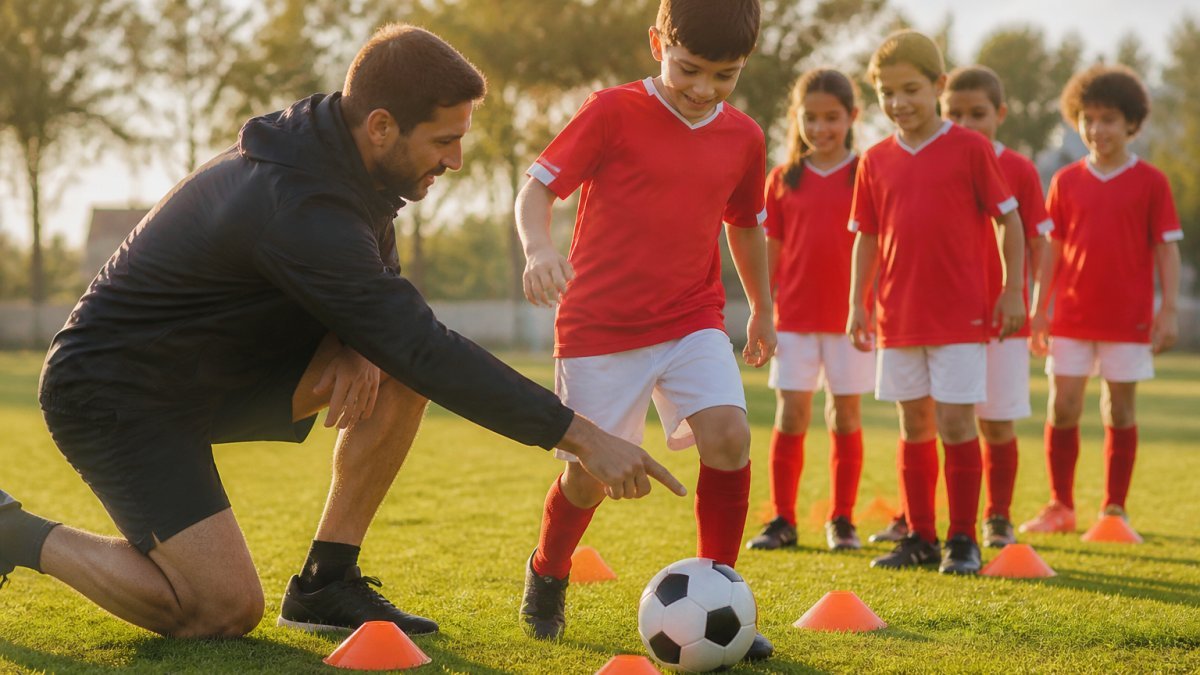
Children learn how to behave in sports by watching the adults around them. That makes modeling the single most powerful way to teach sportsmanship to young children, and it costs nothing but attention.

If you shout at a referee, your child learns that officials are fair game. If you sulk after a loss, your child learns that losing is a personal insult.
The good news is that modeling works in both directions. Small, consistent choices add up:
Clap for the other team when they score a good goal
Thank the coach and the officials, win or lose
Say "good game" to opponents and mean it
Keep your own frustration quiet in the car
Talk about effort and fun more than the scoreboard
Stanford Children's Health recommends a simple set of habits for families: play fair, follow directions, respect the other team, and give everyone a chance to play (Stanford Children's Health guidance on teaching good sportsmanship).
How to Be a Good Sport: Simple Rules Kids Can Remember
Young children need rules they can actually hold in their heads. Long explanations about character and humility will not stick with a five-year-old. Short, repeatable phrases will.
Little League's guidance for families is direct: celebrate participation rather than outcomes, and talk through real examples of good and poor sportsmanship together (Little League tips for instilling sportsmanship). That advice works best when it is boiled down to a handful of lines a child can repeat back to you.
The Four Words That Cover Almost Everything
They cover nearly every situation a young athlete will face:
Play fair. Follow the rules, even when nobody is watching.
Try hard. Give your best effort, every time.
Stay calm. Take a breath when you feel angry or upset.
Be kind. Cheer for teammates, respect opponents, thank the coach.
Four rules. That is it. Print them, say them before every game, and repeat them after.
A quick way to make them stick: turn them into a pre-game chant. Kids love rhythm. "Play fair, try hard, stay calm, be kind." Say it in the car. Say it at the field. Say it so often that your child finishes the sentence before you do.
Helping Children Handle Winning and Losing With Grace
Losing is where sportsmanship gets tested hardest. For parents whose child struggles with losing, our picks for books to help kids handle sports losses offer stories that help children process the disappointment.
Ruff-n-Tuff Sports Pups
The trick is to separate the result from the feeling. A loss is allowed to hurt. What matters is what happens next.
Try these steps after a tough game:
Let your child feel disappointed without rushing to fix it
Name the feeling out loud: "That was frustrating, wasn't it?"
Point to one thing that went well, however small
Talk about the other team with respect
Ask what they want to work on next time
Winning needs the same attention. A gracious winner does not brag, does not rub it in, and does not make the other team feel small. Teach your child to say "good game" to opponents first, before celebrating with teammates.
Scripts for the Car Ride Home
The car ride home is where sportsmanship lives or dies. Kids are tired, emotions are raw, and parents are often tired too. Having a few lines ready makes the whole thing easier.
Try these:
"I loved watching you play today. What was the best part for you?"
"That was a tough loss. What did you learn about your team?"
"I noticed you helped a teammate up after that fall. That was great sportsmanship."
"How did the other team play? Did anything impress you?"
"What do you want to try at practice this week?"
Notice what these scripts avoid: no score talk, no critique, no comparison to other kids. The goal is to open a conversation, not to deliver a verdict. If your child does not want to talk, that is fine. Silence in the car is not a failure.
Sportsmanship Activities for Kids: Practice Beyond the Field
Sportsmanship is a skill, and skills need practice. Waiting for game day to teach it is like waiting for a recital to teach piano. The best sportsmanship activities for kids happen away from competition, in low-pressure moments where mistakes are cheap.
Here is a simple weekly practice plan families can run at home:
Day | Activity | Time | What It Builds |
Monday | Practice losing a board game gracefully | 15 min | Emotional control |
Wednesday | Cheer for a sibling or friend's effort | 10 min | Encouragement |
Friday | Watch a game and spot good sportsmanship | 20 min | Recognition |
Saturday | Cooperative game at the park | 30 min | Teamwork |
Sunday | Read a sports story and talk about it | 15 min | Reflection |
The plan is flexible. Skip a day if life gets busy. What matters is the rhythm, not perfect attendance.
Age-Specific Activities for Preschoolers and School-Age Kids
Preschoolers and school-age kids need very different approaches.
Preschoolers (ages 3 to 5):
Focus on turn-taking above all else
Use very short games with clear rules
Praise sharing and waiting more than scoring
Keep sessions short, ten minutes is plenty
Expect tears and treat them as normal
School-age kids (ages 6 to 10):
Introduce the idea of representing a team
Talk about how opponents feel after a loss
Let them referee small games to see rules from the other side
Ask them to name one act of good sportsmanship they saw each week
Start linking effort to long-term improvement
The shift from preschool to school age is really a shift from "me" to "we." Preschoolers are learning that other people exist and have feelings. School-age kids are ready to understand that those feelings matter in a game.
Cooperative Games for Children That Teach Teamwork and Fair Play
Cooperative games for children remove the win-lose pressure entirely, which makes them a great training ground for teamwork. Everyone plays on the same side. The goal is shared. Nobody goes home a loser.
Try these at home or at practice:
Parachute pop: everyone lifts the parachute together to pop a ball off
Human knot: kids tangle arms and work together to untangle
Cross the river: move the whole group across a "river" using only two mats
Silent line-up: line up by height or birthday without speaking
Group juggle: keep three balls in the air as a team
Each game teaches the same lesson: the group succeeds or fails together. Kids who learn this in a game carry it onto the field.
If your child loves stories, teamwork tales can reinforce the same lesson at bedtime. Our roundup of teamwork stories for kids pairs well with these games.
Handling Unsportsmanlike Behavior From Other Kids and Adults
Not every child on the field will be gracious, and not every parent on the sideline will behave.
Kids copy what they see. When a parent screams at a referee, the kids on that team learn that screaming is acceptable.
When your child faces poor sportsmanship, try this:
Stay calm, especially in the moment
Name the behavior without attacking the person: "That was unkind"
Ask your child how it felt and what they wanted to do
Role-play a calm response for next time
Escalate to a coach or league official if it keeps happening
Watch out: the biggest mistake parents make is responding to bad behavior with bad behavior.
If the behavior comes from a coach or official, document it and raise it calmly with the league. Most youth sports organizations have conduct policies for exactly this reason.
Reinforcing Good Sportsmanship: What to Praise and How to Track Progress
Praise is the engine of behavior change, but not all praise works. Praising the score teaches kids to chase the score. Praising effort, kindness, and self-control teaches them to value those things.
Here is what to praise and how to track it:
What to Praise | Example | How to Track It |
Effort | "You kept running even when you were tired" | Note one effort moment per game |
Kindness | "You helped a teammate up" | Add a sticker to a chart |
Self-control | "You stayed calm after that call" | Talk about it on the car ride |
Teamwork | "You passed when you could have shot" | Mention it at dinner |
Respect | "You thanked the referee" | Praise it in front of others |
A simple sticker chart on the fridge works wonders for younger kids. For older kids, a weekly conversation is often enough. The point is not to grade them. It is to notice the behavior you want to see more of.
If you want to go deeper on building resilience alongside sportsmanship, our guide on how to build mental toughness in young athletes covers the next layer.
Building Confidence With Stories: Books That Teach Sportsmanship
Stories do something rules cannot. They let a child feel what sportsmanship looks like from the inside.
This is the heart of what we do at Ruff-n-Tuff Sports Pups. Our books follow MacDoodle, a lovable Labradoodle, through sports-themed adventures that teach teamwork, grit, and self-belief.
A few ways to use stories as sportsmanship tools:
Read a sports story before a big game
Pause and ask "how do you think that character felt?"
Point back to the story after a real game
Let your child draw or color a scene from the book
Our children's book characters page is a good place to meet MacDoodle and his friends. If you want to browse the full set, you can shop Ruff-n-Tuff Sports Pups books and gifts directly.
Reading together also builds the habit of reflection, which is the real goal. A child who can think about a story can think about their own behavior.
Teaching sportsmanship to young children is not a single conversation.
Frequently Asked Questions
What is the definition of sportsmanship for young children?
Sportsmanship is how a child behaves before, during, and after a game, win or lose. For young children, it comes down to four habits: respecting teammates, opponents, coaches, and officials; following the rules; controlling anger when things go wrong; and encouraging others instead of only chasing the score. Stanford Children's Health lists fair play, following directions, respecting the other team, and giving everyone a chance to play as core parts of good sportsmanship. Keep the definition that simple when you teach sportsmanship at home.
Can cooperative games help teach sportsmanship?
Yes. Cooperative games for children remove the win-lose pressure that often triggers poor behavior, so kids can practice turn-taking, complimenting, and encouraging each other in a low-stakes setting. The same approach works with playground games: name the skill, show it, let your child try it, then praise the specific behavior you saw.
What should parents say when a child loses a game?
Start with empathy, not analysis. Try: "That was a tough one. You worked hard out there." Then ask an open question like "What felt good about today?" before offering any feedback. Little League advises celebrating participation rather than outcomes, and discussing examples of good and poor sportsmanship you noticed during the game. Save technical coaching points for the next practice. The car ride home is where helping children handle winning and losing either builds resilience or damages it.
How do I handle unsportsmanlike behavior from other adults at my child's game?
Keep your own reaction calm and move your child away from the sideline if yelling starts. You can say to your child: "That adult is not following the rules of good sportsmanship. We don't copy that." If the behavior continues, raise it privately with the coach or league organizer rather than confronting the person mid-game. Modeling respectful behavior in that moment teaches more than any lecture, and it protects your child from absorbing the idea that winning justifies anger.
Buy on Amazon
Add ruffntuffsportspups.com as a preferred source on Google →


Comments