7 Tryout Prep Steps for Nervous Kids
Quick Summary
Soccer tryout preparation for nervous kids starts with knowing that pre-tryout nerves are normal. Pack the kit the night before, keep practice short and fun by age, rest the last 48 hours, and give your child a simple calming routine of breathing, grounding and one repeated phrase.
Pack cleats, shin guards, water and a snack the night before the tryout.
Keep practice to ten minutes for ages 5 to 7 and fifteen to twenty minutes for ages 8 to 10.
Do only light ball work and get good sleep in the last 48 hours before tryouts.
Use a short routine of box breathing, five-senses grounding and a repeated phrase on tryout morning.
Praise effort and enjoyment rather than pressuring your child to make the team.
Table of Contents
7 Tryout Prep Steps for Nervous Kids
Last Updated: November 2, 2026
Why Nerves Are Normal Before Soccer Tryouts
Feeling nervous before a soccer tryout is one of the most common experiences a young player will have. Nearly every kid who steps onto a field for selection feels it, whether they are a first-timer or a veteran of several seasons. The first step in soccer tryout preparation for nervous kids is simply knowing that butterflies are normal.

Pre-tryout anxiety is expected, not a sign that your child is unready or unlikely to succeed. For age-specific drills and confidence-building routines that help your child build skills gradually, see how to build confidence in young soccer players.
Here is the good news: nerves can be managed. A little preparation goes a long way toward turning worry into focus.
Soccer Tryout Preparation Checklist for Kids
Good tryout preparation starts well before game day. Use this checklist to keep your child organized and calm.
Cleats, shin guards, and socks ready and fitting well
Water bottle, labeled and filled
Snack that is easy to eat, such as fruit or a granola bar
Clean kit, packed the night before
Printed or saved tryout schedule and field address
A ball for the family to practice with at home
Packing the night before removes a lot of stress. When everything is ready, your child has one less thing to worry about on the morning of the tryout.
Building Skills Without Burning Out
Skill preparation should look different depending on your child's age and experience. A first-time six-year-old and a competitive twelve-year-old need very different amounts of practice, pressure, and recovery. Use the guidance below to match the work to your child.
Ruff-n-Tuff Sports Pups
Ages 5 to 7: fun first, short sessions
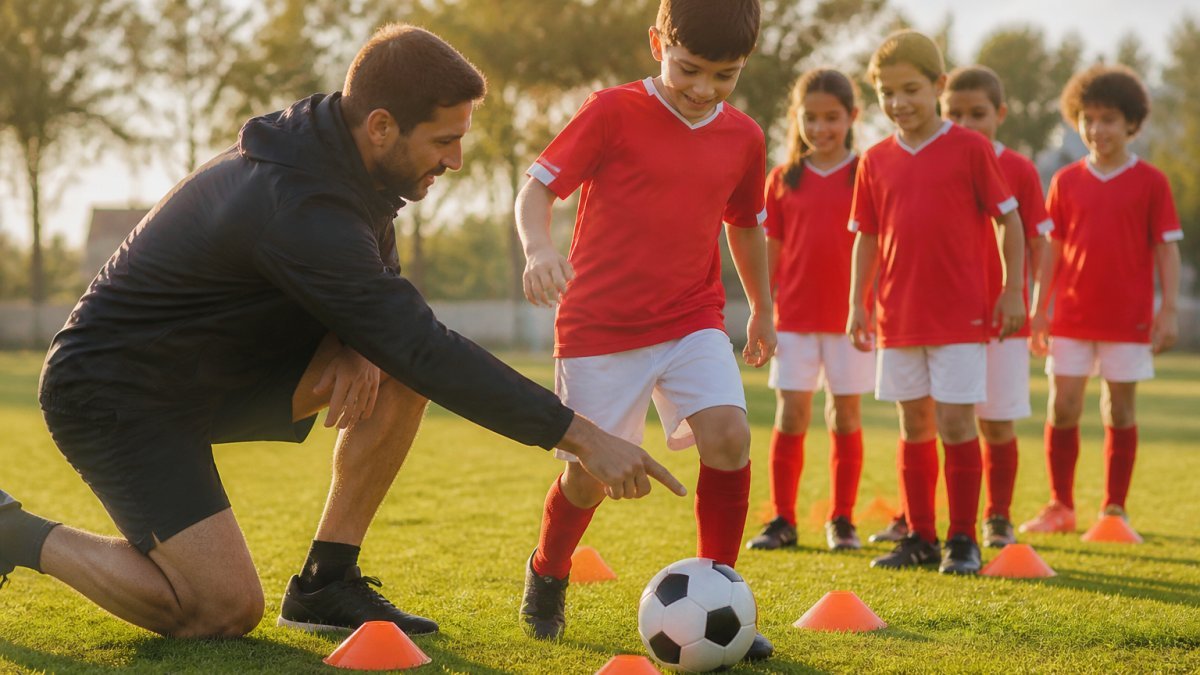
At this age, tryouts are usually about comfort on the ball and willingness to join in. Keep sessions to ten minutes and make them playful.
Dribble through a mini obstacle course of cones, shoes, or water bottles.
Practice stopping the ball with the sole of the foot and changing direction.
Pass back and forth with a parent, counting successful passes.
Finish with a silly challenge, such as scoring on a parent acting as goalkeeper.
Avoid formal drills that feel like school. The goal is touches on the ball and a happy association with playing.
Ages 8 to 10: build one or two core skills
Kids this age can handle short focused practice if it stays fun. Pick one or two skills to work on across the week rather than everything at once.
First touch: pass against a wall and control the rebound with both feet.
Dribbling: practice turns (inside cut, outside cut) at walking pace, then faster.
Passing: short passes with a sibling or parent, aiming for a target.
Keep sessions to fifteen or twenty minutes, three or four days a week.
Ages 11 and up: add decision-making
Older players benefit from practice that includes a choice, not just repetition. Small-sided games with friends, wall-pass combinations, and quick decision drills help more than long lines of static drills.
Play 1v1 or 2v2 in a small space to practice shielding, turning, and passing under light pressure.
Practice receiving the ball with a scan over the shoulder before the first touch.
Work on weak-foot touches for five minutes each session.
Keep one or two rest days each week, especially in the week before tryouts.
Rest, sleep, and food are part of training
No age group benefits from hard training the day before a tryout. The last 48 hours should be light: short ball work, good sleep, regular meals, and water through the day. Tired legs and a rushed morning can cause more problems than a missing drill.
Watch out: more practice is not always better. Kids who train hard right up to tryout day often arrive flat and sore. If your child seems irritable, sleepy, or reluctant, cut the session short and prioritize rest. For more ideas on building confidence through play, visit https://www.ruffntuffsportspups.com.
A Calming Routine a Child Can Use on Tryout Day
Most nervous kids do better with a short, repeatable routine than with a pep talk. The goal is not to remove nerves but to give your child a familiar sequence they can run on autopilot when the field feels loud and strange. To learn more techniques for staying mentally steady under pressure, read how to build mental toughness in young athletes. Practice this routine at home two or three times before tryout day so it feels like second nature.
The night before (5 minutes)
Pack the bag together and place it by the door.
Lay out the kit, socks, and shin guards.
Choose one short self-talk phrase and write it on a sticky note for the water bottle.
Do three slow breaths together before bed: in through the nose for four counts, out through the mouth for four counts.
Tryout morning (10 minutes)
Breathe to a count. Sit together and do five rounds of box breathing: inhale for four, hold for four, exhale for four, hold for four. Younger kids can trace a square in the air with a finger while they breathe.
Ground with the five senses. Ask your child to name five things they can see, four they can touch, three they can hear, two they can smell, and one they can taste. This pulls attention out of worry and into the present.
Say the phrase. Have them repeat their chosen line three times out loud, such as "I'm ready to try" or "One good touch at a time."
Visualize one play. Ask them to picture a single successful moment: a clean first touch, a confident pass, or a strong run. Keep it to one image, not a whole game.
Move the body. A five-minute warm-up of jogging, skipping, and light ball touches helps burn off adrenaline before the first whistle.
On the sideline (2 minutes)
If your child looks tense before the first drill, remind them of the routine rather than adding new instructions. A simple "Breathe, ground, phrase" cue is enough. Some kids prefer a quiet hand squeeze or a countdown from five; ask your child which one helps and use that.
During the tryout
Kids can run a mini version of the routine between drills: one slow breath, one look at the grass or sky, and one repeat of their phrase. This is especially useful after a mistake, when nerves spike. Tell your child ahead of time that a quick reset is a useful skill, not a sign of weakness.
Watch out: a routine that is too long or too complicated will fall apart under pressure. Keep it under ten minutes and practice it until your child can do it without reminders. For more playful ways to build calm and confidence, visit https://www.ruffntuffsportspups.com and explore our sports-themed stories and activities.
What to Say to a Child Before a Soccer Tryout
Your words matter more than you might think. Focus on effort and enjoyment rather than the final team list.

Try phrases like these:
"I'm proud that you're going out there to try."
"Just do your best and have fun."
"Whatever happens, I'll be proud of how hard you worked."
"Mistakes are part of learning. Shake them off and keep going."
Avoid pressure words like "You have to make it" or "Don't mess up." Those phrases raise anxiety. If your child is afraid of not making the team, tell them that tryouts are one day, not a verdict on their whole soccer future.
Youth Soccer Tryout Tips for Parents on the Day
Your role on tryout day is to be calm and supportive. Coaches often notice how players react to mistakes, so help your child stay positive.
Arrive early so there is no rush
Keep your own nerves quiet in front of your child
Cheer for effort, not just goals
Let your child talk about the day, but don't quiz them on every play
Keep snacks and water handy
Coaches tend to watch for effort, listening skills, teamwork, and how a player bounces back from an error. To learn how to model good sportsmanship and support other kids on the day, see how can you teach sportsmanship to young children. Remind your child that a quick recovery after a mistake can impress a coach as much as a great pass.
Helping Your Child Handle a Tough Result
Not every child makes the team they hoped for. Disappointment is hard, but it can also teach real resilience.
Start by listening. Let your child share how they feel without rushing to fix it. For books and ideas that help kids process disappointment after a loss, see books to help kids handle sports losses. Then help them look for one thing they did well and one thing to work on.
Remind them that many players make teams in later tryouts, and that skills grow with practice. Ask whether they still enjoy the game. If they do, keep playing for fun, in a rec league or with friends.
Next Steps After Tryouts With Your Young Athlete
Whatever the result, plan a simple next step together. If your child made the team, talk about goals for the season. If not, talk about what to practice and which local programs might be a good fit.
Ask the coach for feedback when possible. Many coaches are glad to share one or two areas to improve.
For more ideas, visit https://www.ruffntuffsportspups.com and explore our sports-themed stories and activities that build teamwork, grit, and self-belief.
Frequently Asked Questions
How can I help my child feel less nervous before soccer tryouts?
Keep the week as close to normal as possible. Maintain regular practice, sleep, and meals, and avoid heavy talk about the outcome. Let your child talk through what worries them and listen without rushing to fix it. A short, repeatable calming routine, such as slow breathing before warm-up, gives a nervous child something concrete to do with their body. Praise effort and willingness to try rather than the result, since that is what they can control.
What should kids bring to a soccer tryout?
Pack the basics the night before: shin guards, cleats matching the field surface, a properly inflated ball if the session requires one, water in a labeled bottle, a light snack, and clothing for the weather. Include a copy of any registration paperwork the club asked for. Lay everything out in one place so your child is not searching for items in the morning. A packed bag reduces last-minute stress and lets the child arrive calm and on time.
How early should kids start preparing for soccer tryouts?
Light preparation works best when it begins a few weeks before the tryout, with short, regular sessions on first touch, dribbling, and passing with both feet. In the final week, shift to lighter training, good sleep, and steady hydration rather than cramming new skills. Starting too intensely can cause fatigue and more anxiety, so keep the pace comfortable and focused on enjoyment.
How can a child handle making a mistake during a tryout?
Mistakes are expected in every tryout, and coaches often watch how a player responds more than the mistake itself. Teach your child a simple reset: take a breath, look up, and get back into position ready for the next ball. Practicing this at home, after a missed pass or a lost ball, makes the response automatic. Remind your child that one error does not decide the outcome.


Comments