What Are the Best Candlewick Alternatives for Values-Based Stories?
Last Updated: November 3, 2026
Quick Summary
The best candlewick alternatives for values-based stories are publishers and story collections that build character through read-aloud picture books, early readers, and middle grade titles. Look for sources like Lee & Low Books, Barefoot Books, Free Spirit Publishing, and Ruff-n-Tuff Sports Pups, which deliver kindness, empathy, resilience, and courage through character and plot.
The strongest perseverance stories show a character who fails visibly, retries, and earns progress through effort.
Teamwork titles work best when the group is uneven and roles must be redistributed to solve a shared problem.
Read a perseverance book three times with short conversations after each session to turn entertainment into character work.
Ask two questions after reading, not six, then let silence draw out honest answers.
Prefer a series over a single title because a recurring character gives children a reason to return.
Table of Contents
Why Parents Search for Candlewick Alternatives for Values-Based Stories
Parents searching for candlewick alternatives are usually not looking for wicks at all. They are looking for something that does what a trusted publisher does: put kindness, courage, and perseverance into stories a child will actually ask for again. Candlewick Press is one of the publishers known for that promise, and when a family wants more of it, the search terms get messy. Parents often run into this confusion when searching for more values-based books, and end up typing a phrase that pulls up candle-making supplies.
So let's clear it up. The best candlewick alternatives for values-based stories are not wicks, wax, or cotton twine. They are publishers and story collections that deliver the same character-building payoff: read-aloud picture books, early readers, and middle grade titles built around kindness, empathy, resilience, and courage.
Below, we break down what to look for, how to use these stories at home, and which sources are worth your shelf space.
Books That Teach Perseverance to Kids: What to Look For
The strongest perseverance stories share three traits: a character who fails visibly, a setback that feels real to a child, and a resolution earned through effort rather than luck.
When you evaluate a title, read the middle third first. That is where perseverance books live or die. A story that solves the problem on page four teaches nothing. A story where the hero tries, stumbles, adjusts, and tries again gives you something to talk about at dinner.
Look for these markers:
Visible struggle. The character's frustration is shown, not skipped.
A second attempt. At least one retry after failure.
Effort named out loud. Language like "I kept going" or "I asked for help."
A realistic ending. Progress, not perfection.
research on using moral and ethical stories to build values in young children examined storytelling as a tool for teaching values to preschoolers, and while the findings are limited, the underlying idea matches what most parents observe: children absorb values through character and plot far more readily than through instruction.
One insider note. The thing nobody tells you about perseverance books is that the adult's reaction matters more than the book. If you close the cover and say nothing, the lesson evaporates.
Children’s Books About Teamwork: Building Character Through Story
Teamwork stories work best when the squad is genuinely uneven. A fast kid, a slow kid, a kid who wants the ball, a kid who avoids it. That friction is the curriculum.
Here is a publisher-by-publisher comparison of editorial focus for teamwork and collaboration titles.
Publisher | Editorial Focus | Teamwork Catalog Strength | Typical Age Range | Format Notes |
Candlewick Press | Literary picture books and middle grade with character-driven plots | Strong in friendship and community stories; less sports-specific | 3-12 | Picture books, early readers, chapter books |
Lee & Low Books | Diverse voices and social-emotional learning | Strong in inclusive teamwork and community problem-solving | 4-10 | Picture books, early readers |
Chronicle Books | Design-forward, humorous picture books | Good for playful collaboration stories | 3-8 | Picture books |
Barefoot Books | Global folktales and multicultural stories | Strong in cooperative problem-solving across cultures | 4-10 | Picture books with audio |
Free Spirit Publishing | Social-emotional learning and life skills | Explicit teamwork and cooperation titles for classrooms | 5-12 | Picture books, activity guides |
Ruff-n-Tuff Sports Pups | Sports-themed values stories for young athletes | Teamwork shown through relay, defense, and shared-spotlight plots | 4-9 | Read-aloud picture books, coloring books |
A common pattern in teamwork stories that actually land: individual goals collide, a shared problem appears, and the group has to redistribute roles before anything moves forward. The lesson is not "be nice." It is "your role changes depending on what the team needs."
When you evaluate a teamwork title from any publisher, check three things. First, does the group include a character who initially resists cooperation? Without that friction, the story has no arc. Second, is the shared problem concrete enough for a child to retell?
For families with young athletes, sports settings make teamwork concrete. A relay, a doubles match, a defensive drill: each one forces a child to depend on someone else's effort.
If you want specific titles that teach collaboration, match the kind of teamwork you want to reinforce to your child's age.
How to Use Perseverance Books with Kids at Home

Reading a perseverance book once is entertainment. Reading it three times with a short conversation after each session is character work.
Here is the routine we recommend to families:
Read it straight through the first time. No interruptions, no lessons.
Read it again a day later and pause at the failure. Ask what the character felt.
On the third read, connect it to your child's week. "Remember when you missed that shot?"
Name the strategy, not the outcome. Praise the retry, not the result.
Revisit the book when a real setback happens. Keep two or three on hand for exactly this.
A common mistake is turning the story into a lecture. The moment a book becomes a lesson, kids tune out. Keep the conversation shorter than the reading.
Watch out: if you only pull out perseverance books after a failure, children learn to associate reading with being coached. Mix them into normal weeks so the message arrives before the crisis.
Questions to Ask Kids After Reading a Story
The right question opens a conversation. The wrong one closes it.
Skip "What did you learn?" That question invites a performance, and you get the answer your child thinks you want. Try these instead:
What was the hardest moment for the character?
What would you have done at that point?
Who helped, and how?
Did the character want to quit? What kept them going?
What would have happened if they stopped?
Which character reminded you of someone you know?
Ask two, not six. Then stop talking and let the silence do some work. Children often fill it with the most honest thing they will say all day.
For younger readers, swap the questions for a drawing prompt: "Draw the moment it got hard." You will learn more from the picture than from any answer.
How to Choose a Children’s Book That Teaches Positive Values
Choosing well comes down to matching the value, the age, and the reading format before you spend anything. But the top search results stop at generic advice. What they miss is a theme-by-theme, age-by-age list tied to specific publishers and catalogs. Here is that list.
Values-Based Children’s Books by Theme and Age
Theme | Ages 3-5 | Ages 5-7 | Ages 7-10 | Publisher Known for This Theme |
Kindness | Simple sharing stories with one clear act of kindness | Early readers where a character chooses kindness over winning | Chapter books with moral tension around exclusion | Candlewick Press, Lee & Low Books |
Honesty | Picture books where a small lie creates a visible problem | Stories where telling the truth costs something | Middle grade with consequences for deception | Free Spirit Publishing, Chronicle Books |
Courage | Brave-at-bedtime or brave-at-the-doctor stories | Characters who speak up despite fear | Stories of moral courage against peer pressure | Candlewick Press, Barefoot Books |
Inclusion | Books with diverse friends and shared play | Early readers about welcoming a new classmate | Chapter books about belonging and exclusion | Lee & Low Books, Barefoot Books |
Resilience | Characters who try again after a small failure | Early readers with a visible second attempt | Chapter books with sustained setbacks | Ruff-n-Tuff Sports Pups, Free Spirit Publishing |
Teamwork | Shared-task picture books | Early readers with uneven teams | Sports or project stories with role redistribution | Ruff-n-Tuff Sports Pups, Lee & Low Books |
Use the theme and age guidance below to narrow your search.
Selection Criteria Used Here
Three rules sit above the table.
Read the first page out loud in the store or in the sample. If it does not sound good in your mouth, it will not survive bedtime.
Check whether the value is shown or announced. Books that state the lesson on the final page usually did not earn it.
Prefer a series over a single title. A recurring character gives a child a reason to return, and returning is where values stick. Series information is also a practical discovery filter: a publisher with a deep series catalog is usually a better long-term shelf investment than one with a single values title.
For the full Ruff-n-Tuff catalog and series information, visit Ruff-n-Tuff Sports Pups.
Start a Values-Based Reading Routine with Ruff-n-Tuff Sports Pups
A routine beats a reading list. Ten minutes, same time each night, one book from the values shelf, two questions after.
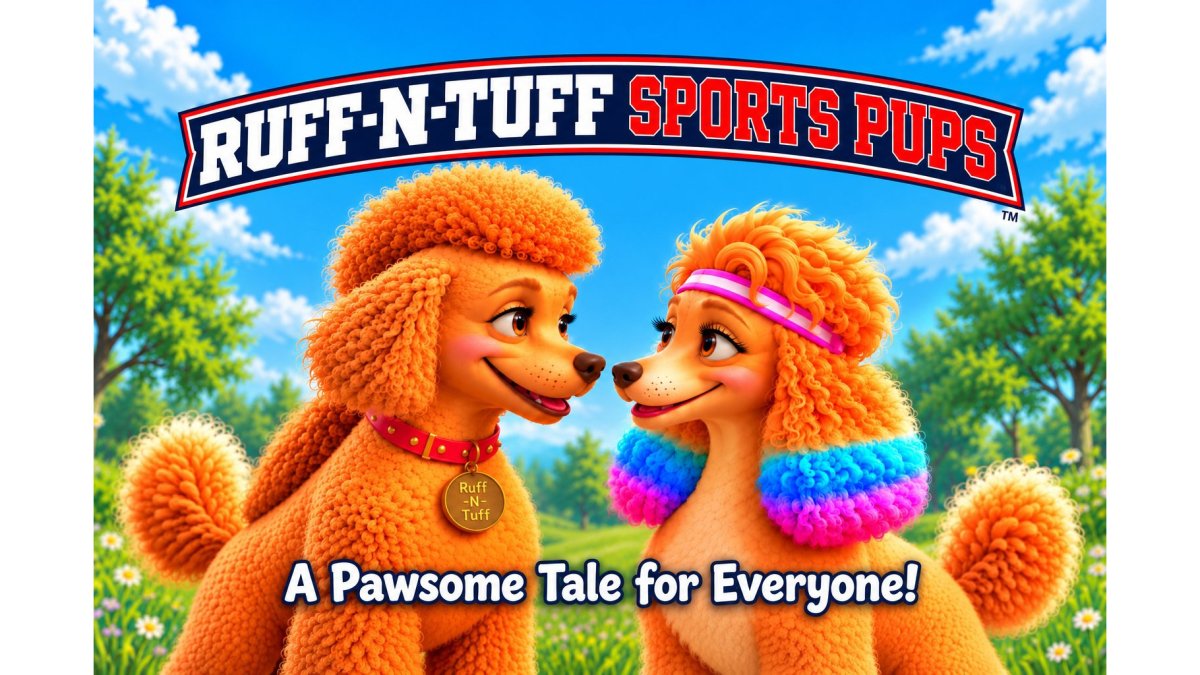
This is where Ruff-n-Tuff Sports Pups fits. Meet the Ruff-n-Tuff Sports Pups to discover MacDoodle, Muffy, and their friends. Our collection stars MacDoodle, a lovable Labradoodle whose sports-themed adventures put perseverance, teamwork, and self-belief into situations young athletes recognize. The collection includes interactive coloring books that give children a creative way to engage with the lessons.
When you are ready to start, visit Ruff-n-Tuff Sports Pups to explore the books, coloring books, and related products.
Frequently Asked Questions
What are the best alternatives to Candlewick for values-based children’s stories?
Look for publishers whose catalogs explicitly focus on character, kindness, and perseverance. Ruff-n-Tuff Sports Pups offers sports-themed adventures starring MacDoodle, a Labradoodle who models teamwork and mental toughness. When browsing, check whether the story shows a character facing a real challenge and working through it, rather than just stating a moral.
Which children’s books teach perseverance and resilience?
Books that teach perseverance show a character struggling with something concrete, failing, and trying again. Sports stories work well because the stakes are clear: a missed shot, a lost game, a tough practice. Ruff-n-Tuff Sports Pups builds each MacDoodle adventure around these moments, helping kids see that effort matters more than instant success. Parents can reinforce the lesson by asking, “What did MacDoodle do when things got hard?” after reading.
What stories help kids learn teamwork and sportsmanship?
The most effective teamwork stories show characters sharing credit, passing the ball, and supporting a teammate who is struggling. Children’s books about teamwork should include moments where a character chooses the group’s success over personal glory. Ruff-n-Tuff Sports Pups centers on MacDoodle learning to share the spotlight and play as a squad, which gives parents a natural starting point for conversations about sportsmanship on and off the field.
How can parents talk with children about the lessons in a story?
Ask open-ended questions that connect the story to your child’s own life. Try: “What would you have done in that situation?” or “How do you think the character felt when that happened?” Keep the conversation short and let your child lead. For perseverance books, ask kids to name a time they kept trying even when something was hard. These questions to ask kids after reading a story turn a passive read into an active discussion about values.
Are sports-themed books a good way to teach kids about character?
Yes, because sports provide clear examples of effort, teamwork, and resilience. A character who misses a game-winning shot and comes back the next day to practice models perseverance in a way children can picture. Ruff-n-Tuff Sports Pups uses this approach with MacDoodle, a Labradoodle whose adventures on the field mirror the challenges kids face in youth sports. The dog angle adds humor and warmth, making the lessons easier for young readers to absorb.
The gap between a child who quits and a child who tries again is rarely talent. It is repetition, and it is a story they have heard enough times to believe. Build the routine, keep two or three books within arm's reach, and let a character like MacDoodle carry the message when your coaching voice has run out. Get started with Ruff-n-Tuff Sports Pups and give your young athlete stories that make perseverance feel like something they already own.


Comments